 Annual Reports
 Report an Injury
 Safety Key
 Upcoming Events
 Agent Login
 Employer Login
 Training Courses
 Ask a Safety Question

















How Employers Can Maintain OSHA Compliance
OSHA compliance means meeting the workplace safety standards established by the Occupational Safety and Health Administration (OSHA) under the Occupational Safety and Health (OSH) Act. These OSHA standards are designed to protect employees from workplace hazards and reduce the risk of workplace injuries and illnesses.
The Occupational Safety and Health Administration (OSHA) often conducts on-site inspections without advance notice, so companies should know what to expect. Maintaining OSHA compliance requires regular training, hazard prevention, clear safety protocols and accurate records.
While many organizations review their safety programs only after an OSHA inspection, proactive employers regularly evaluate workplace hazards, training requirements and safety policies. Knowing how to stay OSHA compliant means identifying the requirements that apply to your workplace and reviewing them as operations change. The following tips can help employers strengthen workplace safety and maintain OSHA compliance.
Here are 5 Tips to Keep Your Company OSHA Compliant:
1. Understand OSHA’s Standards
Every industry is subject to different on-the-job hazards. OSHA provides standards, publications and compliance resources employers can use to identify requirements that apply to their work. OSHA publications and compliance assistance resources can also help employers review requirements for topics including:
- Accident prevention
- Employee training
- Fall protection
- Hazard communication
- Personal protective equipment
- Respiratory protection
- Incident reporting and recordkeeping requirements
For additional reference, employers can also consult OSHA Publication 2254, Training Requirements in OSHA Standards, and OSHA Publication 3151, Personal Protective Equipment.
OSHA standards and requirements can change over time, so employers should review their health and safety policies regularly. OSHA publications can help explain requirements, but employers should verify the current OSHA standard that applies to their work. Some states also operate OSHA-approved State Plans that may differ from federal OSHA. For 2026, the maximum federal OSHA penalty for a serious violation is $16,550 per violation, while the maximum for a willful or repeated violation is $165,514.
2. Address Workplace Hazards
Under the OSH Act’s General Duty Clause, employers must provide a workplace free from recognized hazards that are causing or likely to cause death or serious physical harm. Depending on the work, OSHA standards may also require controls such as fall protection, machine guarding, respiratory protection or personal protective equipment.
A job hazard analysis can help employers identify risks and develop controls specific to the work being performed. When hazardous chemicals are present, the Hazard Communication Standard may also require a written hazard communication program, labels, safety data sheets and employee training.
While small businesses may not have an in-house safety director, there are plenty of free resources to support their safety initiatives. OSHA’s On-Site Consultation Program provides no-cost, confidential compliance assistance to eligible employers and is separate from enforcement. Partnering with your workers’ comp carrier is another way to improve workplace safety conditions.
FFVA Mutual’s policyholders can ask a safety question online and receive a personal response from one of our safety team experts.
3. Develop Comprehensive Safety Policies
The success of any health and safety program is built on clear written policies that outline the responsibilities of both employers and employees. These materials should be easily accessible and distributed to every new worker during their orientation to ensure they fully understand what’s expected of them. Clear policies and consistent communication help employees understand their responsibilities and reinforce safe work practices.
Employee input can make safety policies, processes and procedures more specific to the hazards and work performed at each site. Depending on workplace hazards, OSHA compliance requirements may also call for written programs such as hazard communication or respiratory protection.
4. Maintain Detailed Records
OSHA’s recordkeeping requirements include recording work-related injuries and illnesses and, for certain establishments, electronically submitting information to OSHA. Many employers with more than 10 employees must keep OSHA Forms 300, 300A and 301, although some industries are partially exempt.
Electronic submission requirements depend on establishment size and industry. Establishments with 250 or more employees that are required to keep OSHA records generally submit Form 300A annually. Establishments with 20 to 249 employees in designated industries also submit Form 300A. Certain establishments with 100 or more employees in designated high-hazard industries must also submit information from Forms 300 and 301.
All employers under OSHA jurisdiction must report a work-related fatality within eight hours and an in-patient hospitalization, amputation or loss of an eye within 24 hours. Accurate records help employers identify injury trends and prepare for an OSHA inspection.
5. Conduct Regular Employee Training
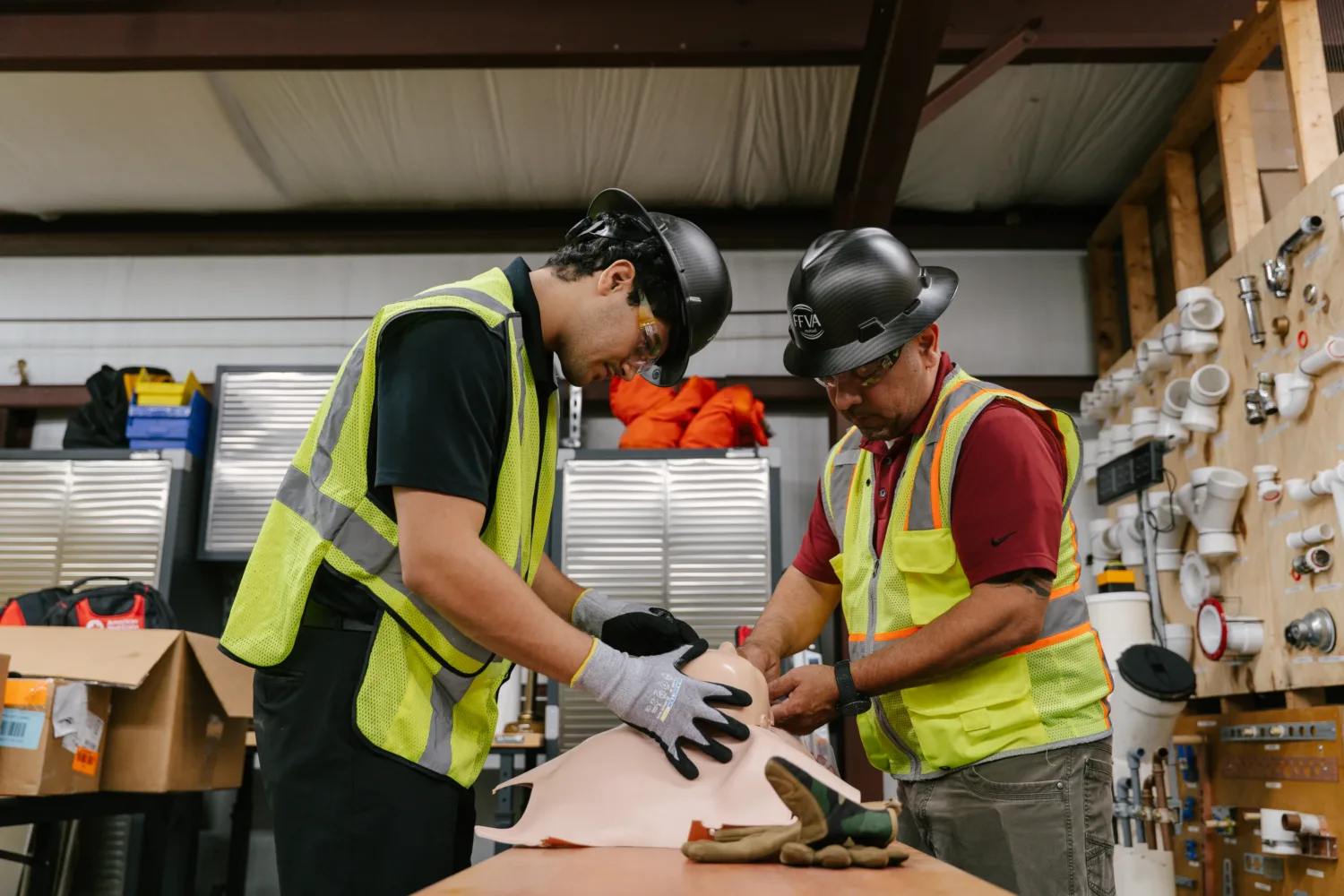
Training and education are crucial to the overall health and safety of your employees and are core elements of any effective accident prevention program. OSHA training requirements vary by standard: Some require recurring training, while others require training at initial assignment, when hazards or procedures change or when retraining is otherwise triggered.
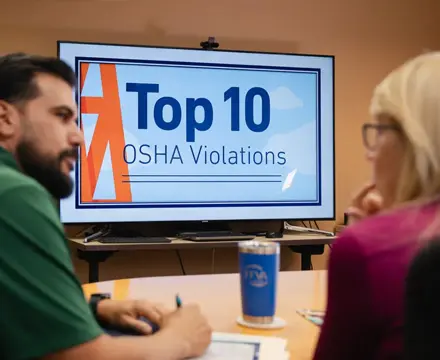
Training should reflect the hazards employees actually face. Depending on the workplace, that may include fall protection, hazard communication, respiratory protection or personal protective equipment. OSHA’s fiscal year 2025 Top 10 Most Frequently Cited Standards included Fall Protection – General Requirements at No. 1, Hazard Communication at No. 2 and Respiratory Protection at No. 5.
At FFVA Mutual, we believe that informed workers are safe workers. That’s why we offer online and in-person training events at no cost to our policyholders. This personalized support can help your company improve its safety initiatives and remain compliant with applicable OSHA requirements.
OSHA Compliance Checklist
Use this short OSHA compliance checklist as a starting point:
- Confirm which federal OSHA or State Plan standards apply to your work.
- Identify workplace hazards and confirm required controls, including PPE and other safeguards.
- Keep written safety programs and procedures current as operations change.
- Maintain required records and meet applicable incident-reporting deadlines.
- Provide OSHA-required training and retraining based on the standards and hazards that apply.
OSHA Compliance Is One Part of Managing Business Risk
OSHA compliance and workers’ compensation both focus heavily on risks involving employees, but one workplace incident can create other exposures, too. An accident could damage business property, involve a company vehicle or lead to a claim from a customer or other third party. Understanding how workers’ compensation and other commercial coverages address different parts of that risk can help employers build more complete protection for their people, property and operations.
Strengthening OSHA Compliance in Your Workplace
Maintaining OSHA compliance is an ongoing process that requires employers to regularly evaluate workplace hazards, update safety programs and provide consistent employee training. By understanding OSHA standards, addressing potential hazards, maintaining proper documentation and reinforcing safety training, organizations can protect workers and reduce the risk of OSHA violations.
Looking for more information on OSHA compliance expectations? Download FFVA Mutual’s OSHA Expectations for Employers checklist to see for yourself