
 Annual Reports
 Report an Injury
 Safety Key
 Upcoming Events
 Agent Login
 Employer Login
 Training Courses
 Ask a Safety Question
























A Guide for Employers
In most cases, yes: If you have employees, you likely need workers’ compensation insurance. State laws often require employers to carry coverage that helps pay for medical care, lost wages and other benefits after a workplace injury or illness.
The details depend on where your business operates, its industry, its employee count and how workers are classified. Some states require workers’ comp coverage as soon as a business hires its first employee. Others allow limited exceptions for sole proprietors, corporate officers or certain business structures.
This guide explains what workers’ compensation insurance covers, who may need it, what can happen without coverage and how to get a policy.
What Is Workers’ Compensation Insurance and What Does It Cover?
Workers’ compensation insurance is coverage that provides benefits to an employee who experiences a work-related injury or occupational illness. In return, workers’ comp generally limits an employer’s exposure to many injury-related lawsuits.
Workers’ comp is not the same as general liability insurance. General liability insurance may help address third-party claims involving customers, visitors or property damage. Workers’ compensation insurance is designed for injuries and illnesses connected to employment. It also serves a different purpose from commercial auto insurance, professional liability insurance, cyber insurance, health insurance and life insurance.
Although workers’ compensation coverage varies by state and policy, it may include:
- Medical care for authorized treatment
- Partial wage replacement when an injured worker cannot perform regular job duties
- Temporary or permanent disability benefits, when applicable
- Vocational rehabilitation or return-to-work support
- Death benefits for eligible dependents after a fatal workplace incident
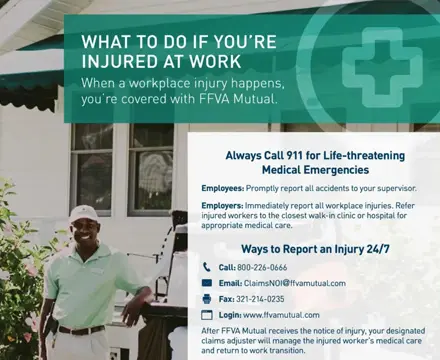
A workers’ compensation claim usually begins when the employee reports an injury. The employer then reports the incident to its insurance company, the claim is reviewed and the injured employee receives appropriate care for a covered claim. Clear reporting procedures, accurate documentation and ongoing communication can help the process move forward.
Do I Need Workers’ Compensation Insurance? A Quick Checklist
Use this checklist to identify questions you need to answer before hiring or expanding:
- If you have one or more employees, you may need workers’ compensation insurance.
- If you employ part-time, seasonal or temporary workers, they may count toward state coverage requirements.
- If you work in a higher-risk field, such as construction, transportation, manufacturing or food service, you may face stricter requirements.
- If you hire an independent contractor, confirm the worker’s classification and any contractual coverage obligations.
- If you are a sole proprietor, partner, corporate officer or LLC member, verify whether you are exempt or eligible to elect coverage.
- If your employees work in more than one state, review whether your policy includes the states where work is performed.
This checklist cannot replace state-specific guidance. Before hiring your first employee, opening a new location or adding a new type of work, confirm your requirements with the relevant state workers’ compensation authority or a licensed insurance professional.
Who Needs Workers’ Compensation Insurance?
Most employers need workers’ compensation insurance after they hire employees, but the threshold varies. In California, employers generally need coverage, even with one employee. In New York, virtually all employers must provide workers’ compensation coverage for employees, subject to limited exceptions. Illinois workers’ compensation requirements apply to most employers when a worker is hired, injured or whose employment is localized in Illinois. The Illinois Workers’ Compensation Commission administers the Illinois Workers’ Compensation Act and provides resources for employers.
These examples show why a business cannot rely on rules from another state. A small employer with remote staff, field workers or a growing team may have obligations based on where employees work, not just where the company is headquartered. State workers’ compensation law can also treat different industries, business entities and worker roles differently.
Employers should also remember that coverage obligations may change as the business changes. Adding an employee, taking on a new contract, entering a new state or changing job duties can affect whether coverage is required.
Who Is Exempt From Workers’ Compensation Insurance?
Some people may be exempt from mandatory coverage, but exemptions are narrow in many states and often depend on the business structure. Here are some examples:
- Sole proprietors without employees may not need workers’ comp insurance for themselves.
- Partners, corporate officers and LLC members may have exemption options in some states.
- Domestic workers may also be treated differently depending on the type and duration of employment.
Independent contractor status needs careful review. Calling someone an independent contractor does not always determine their legal classification. A worker who performs duties under an employer’s direction, follows the employer’s schedule or relies on the employer’s tools may be treated differently under applicable law. Misclassification can create compliance risk and complicate a workers’ comp claim.
Even when coverage is not mandatory, a contractor, client or general contractor may require proof of workers’ compensation insurance before allowing work to begin. Review state rules and contractual requirements before deciding that coverage is unnecessary.
What Happens If You Don’t Have Workers’ Comp Insurance?
If workers’ comp insurance is required and an employer does not carry it, the consequences can be significant. A business may become responsible for an injured worker’s medical care, lost wages and other workers’ compensation benefits out of pocket.
Employers may also face fines, stop-work orders and other regulatory action. In some states, business owners or officers can face personal liability for noncompliance. Without workers’ compensation coverage, an injured employee may have broader options to pursue legal action against the employer.
The effects can extend beyond the immediate accident. A serious workplace injury can interrupt operations, damage employee trust and affect the company’s ability to bid on projects or secure contracts. Maintaining required insurance coverage and investing in safety practices helps support both employee protection and business continuity.
How Much Does Workers’ Compensation Insurance Cost?
Workers’ compensation insurance costs are based on the business, not a universal monthly rate. Insurance companies typically consider payroll, employee class codes, job duties, industry risk, claims history and state rating rules.
For example, an office-based employee may have a different class code and risk profile than a worker who drives for work, operates equipment or handles heavy materials. The more exposure to potential hazards, the more the premium may reflect that risk. An experience modification factor may also affect the cost by comparing a company’s past claims experience with that of similar employers.
Employers can help manage workers’ comp costs by reviewing payroll and classifications regularly, identifying hazards, training employees and reporting injuries quickly. A written safety program, practical claims management and a return-to-work process can also help reduce the frequency and severity of workplace injuries over time.
How To Get Workers’ Compensation Insurance
Employers should arrange workers’ compensation coverage (as required by state law) before an employee begins work. The process generally includes five steps:
- Confirm your requirements: Review the rules for your business location, industry, employee count and ownership structure.
- Gather business information: Prepare payroll estimates, employee job descriptions, work locations, class codes and any available claims history.
- Choose a coverage source: Depending on the state, employers may purchase a policy through an insurance company, work with a licensed agent, use a state fund or explore self-insurance if they meet the necessary requirements.
- Compare policy support: Look beyond the premium. Consider claims handling, safety resources, return-to-work guidance, billing options and support for multi-state operations.
- Bind the policy and keep it current: Put coverage in place, post required notices and update your insurance company when payroll, staffing or operations change.
Workers’ Compensation Insurance FAQs
Do I Need Workers’ Comp if I Have Only One Employee?
Possibly. Some states require employers to carry workers’ comp coverage when they hire their first employee. Others use different employee-count thresholds or industry-specific rules. Confirm the requirement where the employee works.
Are Independent Contractors Covered by Workers’ Comp?
An independent contractor may not be covered by an employer’s policy, but rules vary by state and classification. Some contracts also require contractors to carry their own workers’ compensation insurance. Confirm coverage before work begins.
What Happens if I Don’t Have Workers’ Comp Insurance?
Employers that do not carry required coverage may face fines, stop-work orders, liability for medical care and lost wages, and potential lawsuits. Exact penalties vary by state.
Do Sole Proprietors Need Workers’ Comp?
Sole proprietors may not be required to carry workers’ compensation insurance for themselves in some states. They may still choose to purchase coverage or need it to satisfy a client or contractor requirement.
How Much Does Workers’ Comp Insurance Cost?
The cost of workers’ comp insurance depends on payroll, employee classifications, industry risk, claims history, state rules and experience modification. A licensed insurance professional can help you understand the factors affecting your policy.
When Should I Get Workers’ Comp Insurance?
Get workers’ compensation insurance before your first employee begins work if state law requires it. You should also review coverage when you add employees, expand to a new state, change job duties or begin a new type of work.
Get Workers’ Compensation Insurance for Your Business
Workers’ compensation insurance can help employers meet legal requirements, support employees after a workplace injury and protect business continuity.
The right workers’ comp policy provides more than insurance coverage. It can also connect employers with claims support, safety resources and return-to-work guidance.
FFVA Mutual offers workers’ compensation insurance supported by designated claims adjusters, personalized return-to-work programs and no-cost safety training.
Get a quote to explore coverage and support built around your business.