
 Annual Reports
 Report an Injury
 Safety Key
 Upcoming Events
 Agent Login
 Employer Login
 Training Courses
 Ask a Safety Question










Learn About Safety Stand-Downs
Workplace safety should be a paramount concern for every organization. Unfortunately, work related hazards and injuries continue to be prevalent. Moreover, these injuries can have a lasting impact on workers and their families. Proactive measures are necessary to prevent accidents and injuries, and one such measure is a safety stand-down.
Safety Stand-Down Meaning
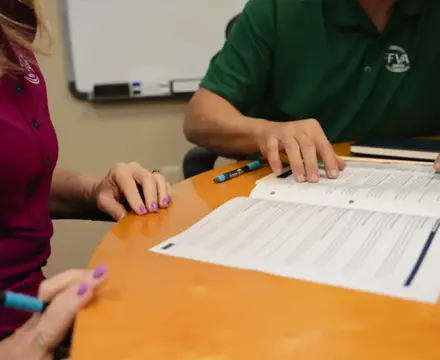
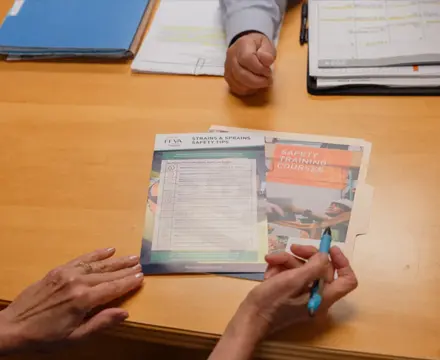
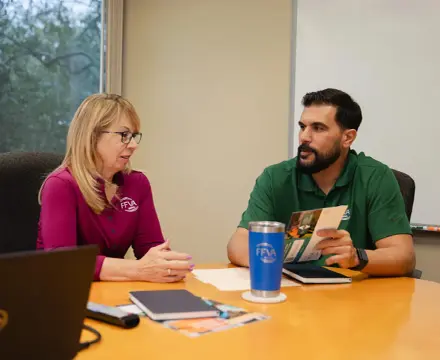
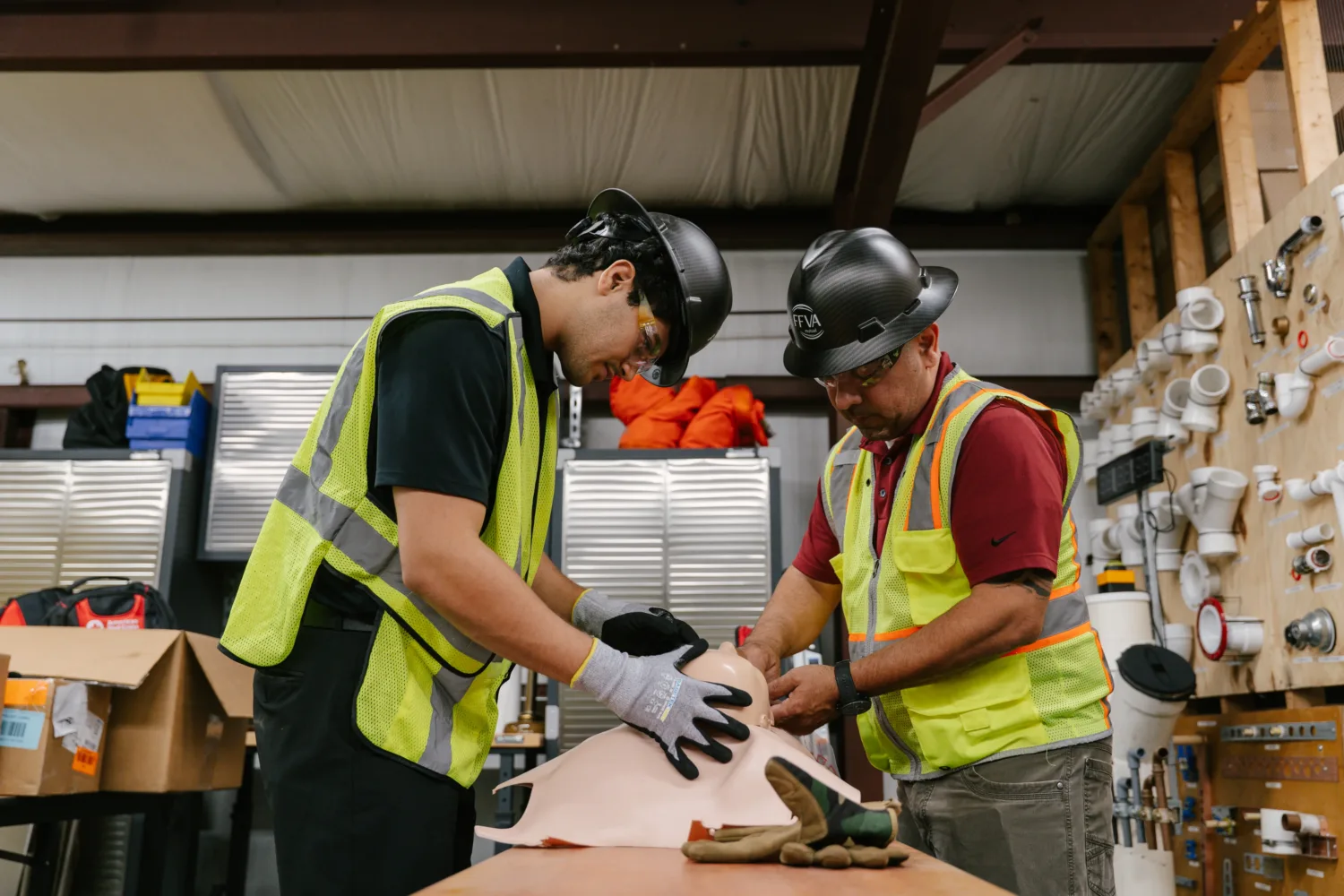
A safety stand-down is a voluntary event that consists of temporary cessations of work or operations in which employees receive education and training on specific topics. It gives employers and employees dedicated time to discuss potential hazards, review safety policies and procedures, and reinforce safe behaviors—supporting injury prevention and a stronger safety culture.
Safety Stand-Down Basics
Since a safety stand-down is often a new concept for many employers, it’s important to keep in mind the following: Safety stand-downs should be conducted in an environment where employees can freely ask questions without feeling like they’re interrupting or disturbing others. It’s also not intended as punishment or scolding; rather, it should be viewed as an opportunity for workers and management to share information about injury and illness prevention programs.
Moreover, it’s essential to ensure that all affected employees are included in the safety stand-down, no matter what their role may be on site. Employers should include contractors and sub-contractors if they’re working on their property.
The primary goal is to prevent injuries and mitigate workplace safety hazards, but it’s also important to help workers take ownership of the situation so that they feel empowered to make changes in their working environment. This can be done by sharing information about OSHA standards, as well as possible solutions for compliance with those standards.
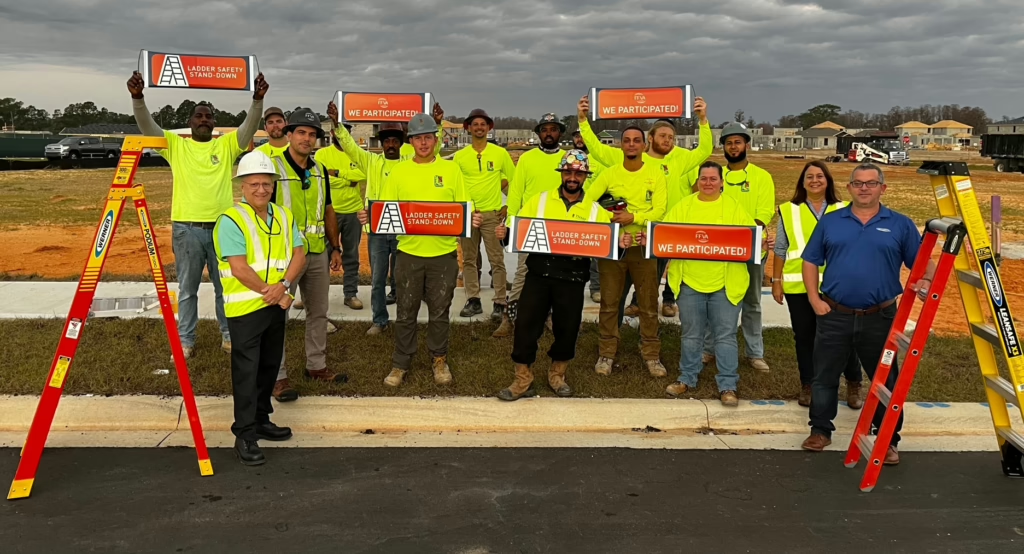
How to Successfully Conduct a Safety Stand-Down
You’re off to a good start if you’re doing a safety stand-down. But there are many ways to make it even better. Here are some tips for making your next stand-down more effective:
- Clearly communicate the purpose and objectives of the stand-down.
- Encourage active participation and engagement from all attendees.
- Ensure the discussion covers relevant and up-to-date safety topics.
- Use visual aids such as videos or presentations to enhance understanding.
As far as a stand-down is concerned, the more you do it, the better it will be. The first one may not go as smoothly as you had hoped. But with practice, you’ll get better at conducting stand-downs and they will become more effective.
4 Safety Stand-Down Topics with Resources
The Safety Solutionists at FFVA Mutual have developed four stand-down campaigns based on top injuries/claims.
- Motor Vehicle Accidents
- Slips, Trips and Falls
- Strains and Sprains
- Ladder safety/falls
1. Motor Vehicle Accidents (MVA)
Why Motor Vehicle Accident Prevention is Important
Motor vehicle accidents are the leading cause of work-related fatalities and injuries in the U.S. FFVA Mutual’s Motor Vehicle Accident Prevention Safety Stand-Down is designed to help employers raise awareness, identify risks, and provide employees with practical tips to prevent motor vehicle accidents on and off the job. These safe driving tips are helpful reminders for employers to share with employees during a MVA stand-down.
Ideas for a Motor Vehicle Accident (MVA) Prevention Stand-Down
Top 10 Ways to Prevent Motor Vehicle Accidents While Driving for Work
- Stay Focused Behind the Wheel
Distracted driving is one of the top causes of work-related crashes. Avoid texting, eating, or adjusting devices. Always keep your eyes on the road. - Buckle Up Every Time
Seat belts save lives and reduce injury severity. Whether it’s a short trip or a long haul, make buckling up automatic. - Follow the Speed Limit
Speeding cuts your reaction time. Drive at a speed that is safe for the road, traffic, and weather conditions. - Avoid Driving When Fatigued
Drowsy driving is as dangerous as impaired driving. Know your limits and take breaks during long shifts. - Drive Only When Clear and Alert
Prescriptions and over the counter medications can impair focus and reaction time. Know the risks and your responsibilities. - Plan Your Route and Stops in Advance
Map out your trip before you go. Planning reduces stress and helps avoid rushed decisions on the road. - Keep a Safe Distance
Tailgating increases crash risk. Leave enough space to stop safely, especially at higher speeds or in poor conditions. - Adapt to Changing Conditions
Weather, construction, and traffic require constant awareness. Adjust your driving as conditions change. - Drive Defensively
Expect the unexpected. Stay alert, anticipate the actions of other drivers, and always respond safely. Keeping your composure on the road protects everyone. - Maintain Your Vehicle
Regular maintenance prevents breakdowns and accidents. Report any mechanical issues as soon as you notice them.
To access downloadable resources, certificates and more, visit this motor vehicle accident prevention stand-down page.
2. Slips, Trips and Falls
Why Slips, Trips and Falls Are a Top Workplace Concern
In today’s fast-paced workplace, it’s easy for employees to become complacent about safety or overlook potential hazards like wet floors or uneven surfaces. According to the Occupational Safety and Health Administration (OSHA), falls are one of the leading causes of serious workplace injuries. Many of these incidents are preventable with proper training and awareness.
Ladder safety is a niche but important aspect of slip, trip and fall prevention. According to the U.S. Bureau of Labor Statistics (BLS), in 2020, there were 22,710 injuries where the primary source of the injury was a ladder. At FFVA Mutual, we’ve seen a worrying trend of increasing ladder-related claims, where ladder-related claim costs have averaged more than $250,000 in the past three years.
Furthermore, the Occupational Safety and Health Administration (OSHA) reports that Fall Protection, construction (29 CFR 1926.501), Ladders, construction (29 CFR 1926.1053) and Fall Protection Training, construction (29 CFR 1926.503) were among the top 10 most frequently cited standards in the 2023 fiscal year, reinforcing the need to address these issues. Employers can reduce the risk of ladder accidents and prevent falls by providing training on the proper use and maintenance of ladders, as well as enforcing a policy for their safe storage and removal from work areas.
At FFVA Mutual, claims data highlights the significant costs associated with slip-and-fall incidents. Common contributing factors include cluttered walkways, improper footwear and inadequate hazard identification. These risks emphasize the importance of addressing slip, trip and fall prevention during a safety stand-down.
Ideas for a Slip, Trip and Fall Safety Stand-Down
A stand-down focused on slips, trips and falls should include practical advice and demonstrations to reinforce safe practices. Consider incorporating these ideas:
- Hazard identification walkthroughs: Lead employees through the workplace to identify potential slip, trip and fall hazards, such as wet floors or loose cords.
- Demonstrate proper cleanup procedures: Show employees the correct way to clean up spills promptly and mark wet areas with clear signage.
- Discuss footwear guidelines: Highlight the importance of slip-resistant footwear and provide examples of appropriate options for different work environments.
- Review incident reports: Share real-world examples of slip-and-fall incidents to illustrate the consequences of overlooking hazards.
- Interactive scenarios: Set up stations where employees can practice recognizing and mitigating risks, such as securing loose mats or organizing cluttered walkways.
3. Strains and Sprains
Schedule a Safety Stand-Down to Prevent Strains and Sprains at Work
Sprains and strains in the workplace are common and costly. Luckily, they are also preventable. First, it’s important to learn about the difference between the two injury types and treatment for both.
What’s the Difference between Strains & Sprains?
Strains are injuries to a muscle or tendon, attaching muscles to bones, and are often caused by overuse, force, or stretching.
Sprains are tissue injuries such as a tear to a ligament connecting two bones, resulting from wrenching, or twisting a joint.
Symptoms: There is one main difference in symptoms: with a sprain, you will usually see bruising while a strain will not, but it can have spasms of the affected muscle.
Treatment: Initial treatment for both strains and sprains include RICE – rest, ice, compression, and elevation. Mild sprains can be successfully treated at home. Severe sprains sometimes require surgery to repair torn ligaments. For workplace injuries, always have the injured worker see a doctor for a professional evaluation and diagnosis.
For related resources, download this strains and sprains prevention resource guide and this top ways to prevent strains and sprains flyer.
4. Ladder Safety/Workplace Falls
Ways a Ladder Safety Stand-Down Prevents Workplace Falls
Using a ladder takes more than common sense, it takes awareness and training. According to OSHA, falls from portable ladders (step, straight, combination and extension) are one of the leading causes of occupational fatalities and injuries. Holding a ladder safety stand-down will help you prevent ladder related injuries at your workplace. During the stand-down, be sure to review safe ladder use, inspections, policies and procedures to help prevent ladder injuries at work.
Ideas for a Ladder Safety Stand-Down
Safety is the most important job on any ladder. Employers can use these 7 ladder safety tips to promote ladder safety during a stand-down:
- Review and demonstrate the correct way to inspect a ladder before use.
- Discuss the importance of using the right ladder for the job.
- Teach proper ladder placement and stability.
- Discuss weight limits and the dangers of overloading a ladder.
- Demonstrate how to properly secure the ladder when in use.
- Highlight the importance of keeping the ladder clean and free of debris, which is even more crucial for those in the construction industry.
- Encourage attendees to report any damaged or faulty ladders immediately.
Note that these steps are designed to be used individually or in combination with each other. The idea is to provide a wide variety of options so that you can choose what works best for your needs and situation.
What’s Next for Safety?
Safety is an ongoing process that needs to be continuously monitored and updated as new hazards are discovered, technologies emerge and safety standards change. Best practice is to conduct regular assessments of the workplace and maintain up-to-date information about what is happening on-site. To help with this we recommend doing the following:
To further emphasize the importance of safety in the workplace, let’s turn to the words of our own Vice Preident of Safety and Loss Control, Ernie Medina. “Promoting safety should be a daily effort. Safety campaigns are just one tool to help employers stay proactive, but it’s the employees’ right to work in a hazard-free environment.”
With this in mind, we recommend you take the following steps to ensure the safety of your employees while they work with ladders:
- Establish a reporting system: Create an easy-to-use system for employees to report hazards and near misses.
- Perform regular inspections: Conduct routine checks of work areas to identify and address hazards promptly.
- Reinforce safety training: Offer ongoing training sessions to reinforce key safety practices and ensure compliance with OSHA standards.
- Promote a culture of safety: Foster an environment where employees feel empowered to speak up about safety concerns without fear of retaliation.
OSHA’s national safety stand-down to prevent falls in construction are typically held every year in May. Any employer can take part, but in past years, participants have included commercial construction companies of all sizes, residential construction contractors, highway construction companies, the U.S. military, safety equipment manufacturers and more.
Safety Stand-Down FAQs
What are the key purposes of a safety stand-down?
The key purposes of a safety stand-down are to:
- Refocus attention on workplace safety
- Identify and address potential hazards
- Reinforce safety policies and procedures
- Encourage open communication and employee involvement
- Prevent injuries before they occur
By intentionally pausing work to talk about safety, employers help create an environment where everyone feels responsible for looking out for one another.
How long does a safety stand-down last?
A safety stand-down can last anywhere from 15 minutes to over an hour, depending on the purpose, work environment, and topics being covered. Many employers find that 30–60 minutes is enough to review key hazards, discuss safety expectations, and answer questions without disrupting operations more than necessary. The most effective safety stand-downs are focused, well-planned, and long enough to encourage meaningful discussion.
Why is it called a safety stand-down?
The term safety stand-down comes from the idea of temporarily standing down from normal work activities to give full attention to safety. By pausing production or job tasks, employers signal that safety is a priority—creating space for open conversations about risks, procedures, and prevention before work resumes.
How do you conduct a safety stand-down?
Conducting a safety stand-down doesn’t have to be complicated, but it should be intentional. Key steps include:
- Set a clear purpose – Identify the safety topic, concern, or incident you want to address.
- Pause normal work activities – Make sure employees are free from job duties and distractions.
- Engage leadership – Supervisors and managers should actively participate and lead the conversation.
- Discuss hazards and safe practices – Review relevant risks, procedures, and recent lessons learned.
- Encourage employee input – Invite questions, feedback, and observations from the team.
- Reinforce expectations – Remind everyone of safety policies and shared responsibility.
- Document the discussion – Keep a brief record of topics covered and any follow-up actions.
A successful safety stand-down is interactive, respectful, and focused on prevention.
When should an employer hold a safety stand-down?
Employers can hold a safety stand-down at any time, but they are especially effective after a workplace incident, near miss, or safety concern. Many organizations also schedule safety stand-downs proactively—such as during Safety Week, when starting new projects, or when introducing new equipment or procedures—to reinforce safe work practices before issues arise.
Are safety stand-downs required by OSHA?
OSHA does not require safety stand-downs in most situations, but it strongly encourages them as a best practice for improving workplace safety. Participating in voluntary stand-downs, such as OSHA’s National Safety Stand-Downs, can help employers raise awareness, promote open communication, and demonstrate a commitment to injury prevention.
Who should participate in a safety stand-down?
A safety stand-down should include all employees, from frontline workers to supervisors and management. Leadership participation is especially important—it shows that safety is a shared responsibility and reinforces the message that safe work practices are supported and expected at every level of the organization.
What topics should be covered during a safety stand-down?
Topics should be relevant to the specific workplace and may include:
- Common job-related hazards
- Recent incidents or near misses
- Safe work procedures and PPE requirements
- Changes in equipment, processes, or job tasks
- Employee safety concerns or observations
Focusing on real-world risks helps make the discussion meaningful and actionable.
How often should safety stand-downs be held?
There is no set rule, but many employers conduct safety stand-downs annually or semiannually, with additional sessions held as needed. Some organizations schedule shorter, more frequent stand-downs to address seasonal risks, new projects, or emerging safety concerns. Consistency helps reinforce safety awareness over time.
Can a safety stand-down help reduce workplace injuries?
Yes. When done effectively, safety stand-downs can help identify hazards early, reinforce safe behaviors, and improve communication between employees and leadership. These conversations support a stronger safety culture, which plays a key role in reducing injuries, claims, and disruptions in the workplace.
Additional Resources from FFVA Mutual
We believe that every employer should have access to the resources they need to host successful and effective stand-down events. When you’re looking to host your next stand-down, we encourage you to take time to learn more about ways to hold your own Motor Vehicle Accident Prevention Stand-Down event and access the many resources available to employers and workers. Our materials include a comprehensive, user-friendly resource on MVA prevention that’s packed with useful information.
And of course, whenever you need any additional safety support or guidance, our team of Solutionists are always here to help. It’s our goal to help create safer workplaces, and we’re proud of the work we’ve done so far. But safety is a never-ending journey that requires continued vigilance and effort from all parties involved. We hope you join our MVA prevention campaign for more resources and to help us keep this important conversation going.