
 Annual Reports
 Report an Injury
 Safety Key
 Upcoming Events
 Agent Login
 Employer Login
 Training Courses
 Ask a Safety Question
























Types, Eligibility and How They Work
Workers’ compensation benefits are no-fault protections that cover medical treatment, lost wages and rehabilitation after a workplace injury or illness. For employers, they serve as a safeguard against liability while demonstrating a commitment to their employees’ occupational health.
Because workers’ compensation is governed by state law, the exact benefits, waiting periods and maximum durations vary. In this guide, we’ll break down the major types of workers’ comp benefits, how eligibility is determined and what to expect as a claim progresses.
What Are Workers’ Compensation Benefits?
Workers’ compensation benefits are the resources provided to an employee after a work-related injury or occupational disease. Because the system operates on a no-fault basis, an injured worker does not have to prove employer negligence to qualify. Instead, the employee receives benefits while the employer is shielded from most lawsuits connected to the injury.
Across states, benefits generally fall into five categories:
1. Medical Benefits
Medical benefits are often the first and most visible part of a workers’ compensation case. They cover reasonable and necessary medical expenses, including:
- Initial evaluations and diagnostic testing
- Surgery, physical therapy or occupational therapy
- Prescriptions and follow-up visits
- Durable medical equipment such as braces or crutches
In some states, benefits may also reimburse mileage to and from appointments. Typically, an authorized treating physician, who is selected based on state-specific rules, must provide the care. In some states employers and insurers may provide a panel of physicians. Utilization review processes confirm that treatment is medically necessary and consistent with state guidelines.
When paired with structured return-to-work (RTW) programs, medical benefits don’t just cover treatment — they also help injured employees recover sooner and rejoin the workplace safely.
2. Wage Replacement Benefits: TTD and TPD
When an employee is unable to perform their pre-injury job, indemnity benefits help cover lost income. These payments are divided into two categories:
- Temporary Total Disability (TTD) benefits: Paid when the employee cannot work at all due to the injury. Typically, TTD benefits equal a set percentage of the worker’s average weekly wage, subject to state minimums and maximums.
- Temporary Partial Disability (TPD) benefits: Paid when the employee can work in a reduced capacity (such as modified duty or fewer hours) but earns less than before. TPD benefits usually equal two-thirds of the difference between pre-injury and post-injury wages, capped by state law.
Waiting periods vary by jurisdiction and are applied before indemnity benefits begin, though benefits may be retroactive if the employee misses more work. Employers should always check their state’s rules for specifics.
3. Permanent Disability Benefits: PPD and PTD
If an employee has not fully recovered after reaching maximum medical improvement (MMI), permanent disability benefits may apply. These are divided into:
- Permanent Partial Disability (PPD): When an impairment persists but the employee can still work in some capacity. States use different systems to calculate PPD, such as scheduled ratings (based on the affected body part) or whole-person impairment ratings.
- Permanent Total Disability (PTD): When the injured employee is unable to return to any gainful employment because of the severity of the condition.
Permanent disability benefits can be paid as continuing indemnity or in conjunction with a lump-sum settlement. The final award depends on medical ratings, vocational factors and state formulas. For employers, understanding how these benefits are calculated is key to managing long-term costs and supporting injured employees fairly.
4. Vocational Rehabilitation and Retraining
Not every employee can return to their pre-injury job. Vocational rehabilitation ensures they still have a path to re-enter the workforce. These benefits may include:
- Skills assessments to identify transferable abilities
- Tuition assistance or training programs
- Resume development and job placement support
Early intervention makes a difference. When employers, insurers and vocational specialists coordinate return-to-work planning, claim durations shorten and employees experience less financial and emotional strain.
5. Death Benefits and Funeral/Burial Costs
In the tragic case that work-related injuries or illnesses result in death, workers’ compensation benefits extend to qualifying dependents. Death benefits typically cover:
- Weekly income support for surviving dependents, based on a percentage of the deceased employee’s wages, subject to statutory limits
- Funeral and burial costs, up to an amount defined by state law
The eligibility rules for dependents and the benefit duration differ by state, but the intent remains the same: to provide financial stability to families who have lost a source of income due to a workplace injury or illness.
Eligibility and Common Qualifying Situations
Workers’ compensation benefits apply when an employee suffers a work-related injury or occupational illness that arises “out of and in the course of employment.” In other words, the incident must stem from job duties or workplace conditions.
Qualifying examples include:
- A warehouse worker injures their back lifting boxes
- An office employee develops carpal tunnel from repetitive typing
- A nurse contracts an infectious disease at work
- A construction crew member is struck by falling equipment
Occupational diseases and repetitive trauma injuries are also compensable in many cases, provided they can be linked to job conditions.
Not every injury qualifies. Claims may be denied if caused by:
- Horseplay or fighting
- Intoxication or drug use
- Self-inflicted harm
- Off-duty activities unrelated to work
Commuting accidents are often excluded unless the employee was performing duties for the employer at the time.
Duration, Waiting Periods
Eligibility for indemnity benefits depends on state rules and the severity of the condition.
- Waiting period: Most states impose a three-to-seven-day delay before wage loss begins. If the disability extends beyond a set threshold (often 14 days), benefits are paid retroactively.
- Temporary benefits: TTD benefits continue until the worker reaches maximum medical improvement or the maximum timeframe has been met depending on state statutes. Temporary partial disability applies when reduced hours or wages are assigned.
- Permanent disability: Paid based on impairment ratings and state schedules, sometimes for years or life in permanent total cases.
Each state sets caps on weekly amounts, often tied to the statewide average weekly wage. Employers should understand these limits to plan effectively.
How Workers’ Compensation Differs by State
While workers’ comp benefits are universal, the details vary widely:
- Waiting periods: Both the waiting period and retroactive pay varies by state
- Benefit caps: Maximum weekly wage loss benefits differ and are state specific
- Medical care: Often medical care is directed by the Carrier, some states allow the injured worker to choose the doctor, while others require use of an employer’s posted panel
Because statutes differ, employers must rely on their specific state laws and lean on their carrier for compliance support.
Accessing Workers’ Comp Benefits
Understanding the process is key for both employers and employees. Here are the steps to accessing workers’ comp benefits:
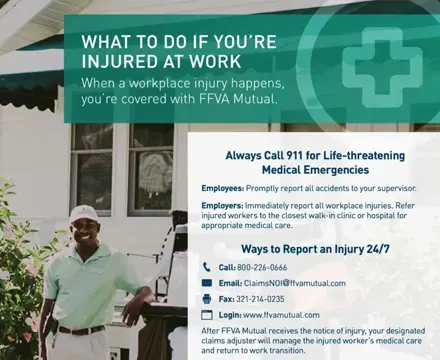
- Report the injury: The injured worker must notify the employer promptly and in accordance with the statute
- Employer files: The employer submits the first report of injury to the insurance carrier
- Investigation: The carrier reviews medical records and speaks with the parties involved to confirm compensability
- Acceptance or denial: If accepted, medical benefits start immediately, while wage loss begins after the waiting period
- Ongoing management: Appointments, modified duty and progress monitoring continue until the worker reaches maximum medical improvement
FAQs About Workers’ Compensation Benefits
What do workers’ compensation benefits include?
They typically cover medical care, wage loss, permanent impairment benefits, vocational rehabilitation and death benefits for dependents in fatal cases.
Who is eligible?
Any employee who suffers a job-related injury or illness, provided it’s reported within state time limits.
How long do benefits last?
Temporary benefits last until maximum medical improvement or state specific maximums are reached. Permanent disability awards may extend for years or life, depending on state statutes.
Do workers choose their own doctor?
Rules vary by state; often medical care is directed by the Carrier, some states allow the injured worker to choose the doctor, while others require use of an employer’s posted panel.
How are wage benefits calculated?
Based on a percentage of average weekly wage, subject to state minimums and maximums. TTD benefits are often two-thirds of lost wages, while TPD benefits cover partial loss compared to the pre-injury job wage.
Protect Your Employees with the Right Coverage
Workers’ compensation benefits protect both employers and employees by covering medical costs, wage loss and long-term support, if necessary, after workplace injuries. With the right workers’ comp insurance, companies can avoid disputes and support recovery.
FFVA Mutual partners with employers to deliver efficient claims management and proactive safety resources. From preventing claims to guiding return-to-work programs, our Solutionists help protect the health of workers and the performance of businesses.
Request a quote today.