
 Annual Reports
 Report an Injury
 Safety Key
 Upcoming Events
 Agent Login
 Employer Login
 Training Courses
 Ask a Safety Question


















Understanding ANSI First Aid Kit Requirements
No matter how committed you are to workplace safety, accidents happen. Workplace first aid kits — often called “first aid boxes” — ensure every organization is prepared to treat injuries quickly and effectively.
First aid kits should form a basic element of your first-line defense. Consisting of the medical aid supplies and equipment needed to quickly respond to moderate injuries, first aid kits give you the capacity to bandage cuts, stop bleeding and sterilize wounds before seeking further medical services.
Reflecting the importance of these necessities, it’s important to consider the American National Standards Institute’s (ANSI) first aid kit requirements as a fundamental element of workplace health and safety.
What Are the Basic First Aid Kit Requirements?
At a minimum, workplaces should stock a kit that enables immediate emergency assistance for minor cuts, burns, eye irritation, and bleeding control until advanced care arrives. ANSI/ISEA Z308.1-2021 defines two kit classes:
- Class A: Your class A kit provides the basic essentials for some of the most common workplace injuries. They’re suitable for most workplaces and should form the baseline for your selection of workplace first aid kit components.
In addition, a Class A first aid kit supply must contain the full assortment of ANSI compliant supplies in the quantities specified in Table 1 of ANSI/ISEA Z308.1-2021 — which will make sure it’s equipped to treat minor burns, cuts, abrasions and eye injuries until further attention arrives.
- Class B: ANSI first aid class B kits contain the same medical supplies and equipment as Class A kits, but in much greater quantities to address highly specific and complicated workplace injuries — the details can also be found in Table 1 of ANSI/ISEA Z308.1-2021. Note that a Class B supply kit must include two extra tools: a splint and a tourniquet. However, they’re sometimes tailored to the unique occupational health requirements of defined sectors or industries.
ANSI First Aid Box Requirements at a Glance
Here are ANSI’s guidelines when it comes to first aid kit containers:
- Type I first aid kits are designed for indoor, stationary use and are typically mounted in a fixed location. They’re commonly found in offices, schools and other indoor locations.
- Type II kits are portable and meant for indoor use, with a low risk of damage to the supplies. They’re ideal for a smaller, yet high-traffic work environment such as a retail store, restaurant or salon.
- Type III kits are portable and intended for use in mobile, indoor and outdoor settings and are water-resistant. They are suitable for outdoor workplaces such as construction sites, camping trips or other activities where there may be exposure to moisture
- Type IV first aid kits are meant for portable use in outdoor and mobile industries, where the supplies may face potential damage from environmental factors and rough handling. These kits must meet specific performance guidelines to resist corrosion, moisture and impact as specified in ANSI/ISEA Z308.1-2021. Examples of industries that would benefit from Type IV kits are agriculture, forestry, and oil and gas.
Where Should First Aid Boxes Be Located?
First aid kits give you the tools to respond to an accident, but they’re also compact and easily accessible. Even if you have the required medical supplies in your workplace, if they’re stuck in drawers or hanging out behind desks they won’t be of service to anyone — especially in an emergency.
First aid boxes should be placed in easily accessible areas where employees can reach them quickly in an emergency. Common locations include:
- Near high-risk work areas such as machinery, loading docks or production lines
- In break rooms, offices or common areas for general access
- Close to exits or central walkways
- In vehicles or mobile units for field-based teams
First aid boxes should never be locked away or difficult to access. Clear signage and regular employee awareness help ensure they can be used immediately when needed.
How Many First Aid Boxes Does a Workplace Need?
The number of first aid boxes required depends on your workforce size, workplace layout and level of risk. As a general guideline:
- Small workplaces may only need one centrally located first aid box
- Larger facilities should have multiple boxes distributed across departments or floors
- High-risk environments may require additional kits near specific hazards
- Remote or mobile workers should have access to portable first aid boxes
Employers should ensure that first aid supplies are always within quick reach of employees, especially in areas where injuries are more likely to occur.
What Is Required To Be in a First Aid Kit?
ANSI’s Z308.1-1998 minimum requirements for workplace first-aid kits are as follows:
Wound care:
- Adhesive bandages (assorted sizes) for minor cuts and abrasions
- Sterile gauze pads and trauma pads to absorb bleeding
- Antiseptic wipes or antibiotic application to reduce infection risk
- Adhesive tape to secure dressings
Dressings and bandages:
- Roller bandages (2 inches and 4 inches) for support and compression
- Triangular bandages for slings or securing splints
- Burn dressing (gel-soaked) and burn treatment packets
Tools and safety equipment:
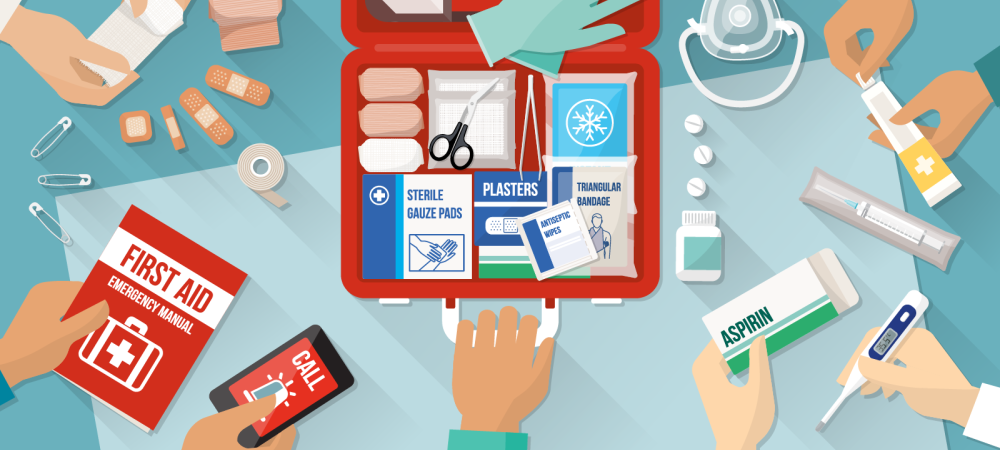
- Disposable medical gloves
- Breathing barrier for CPR
- Scissors and tweezers to cut tape or remove small debris
- Splint and tourniquet (required in Class B kits)
- First-aid guide so responders can follow step-by-step care
Other useful items:
- Cold packs for swelling
- Eye covering with attachment and eye/skin wash
- Hand sanitizer for hygiene
- Consider foil blankets in outdoor or cold environments
Beyond fulfilling your federal ANSI compliance requirements, having a well-stocked first aid kit also demonstrates to employees that you take their occupational safety and well-being seriously. It shows them that you’re willing to invest in them as people, and that you have the capacity to provide meaningful medical support if they suffer from a workplace injury.
This can go a long way to strengthening your relationships with employees, increasing engagement and lowering your quit rates.
What Are OSHA Requirements for First Aid Kits?
While the Occupational Safety and Health Administration (OSHA) has a number of guidelines governing the storage, usage and inspection of first aid kits, they have not set requirements to have one. They do, however, maintain specific guidelines for the following industries:
Moreover, OSHA has established regulations for medical services and first aid in the workplace through the 29 Code of Federal Regulations (CFR) 1910.151 (b). This regulation requires that at least one member of your staff is trained in providing first aid medical treatment, including CPR. But ideally, you should have multiple staff members equipped with the skills needed to respond in the event of an emergency, maximizing your chances of success if the worst happens.
Alternatively, OSHA states employers can rely on the “near proximity” of an infirmary, clinic or hospital, which is no more than 4 minutes away from the workplace — an interpretation that has been upheld by the Occupational Safety and Health Review Commission as well as by federal courts.
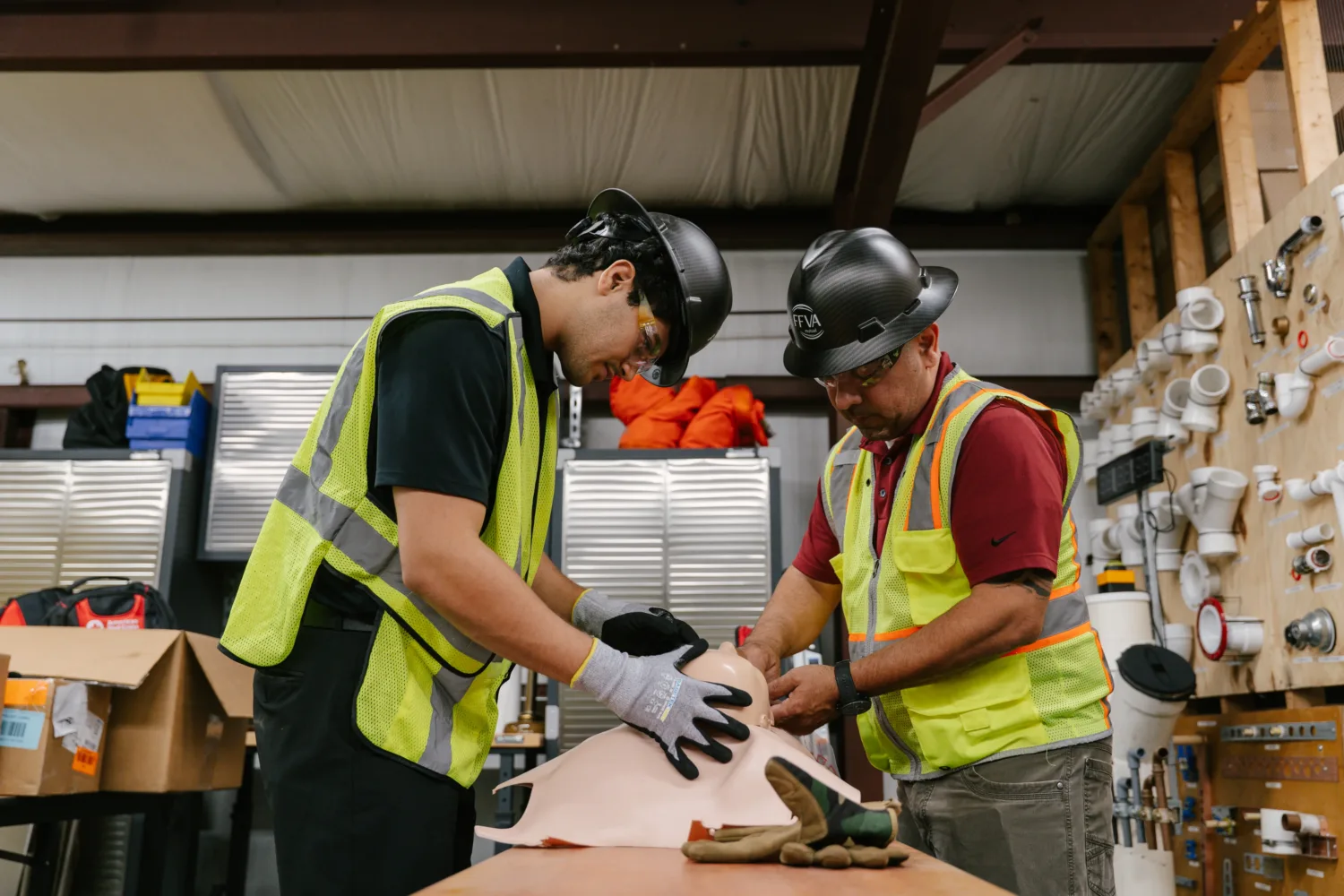
At FFVA Mutual, we offer a range of CPR and first aid training courses, at no cost to our policyholders. Reach out today to sign up for one of our courses.
First Aid Kit Annual Inspections
Your first aid kits (and associated emergency response plans) should pass annual inspections. Inspectors will determine whether your kits are equipped with adequate first aid supplies considering your unique workplace health and safety hazards.
Inspectors will also seek to ensure that your personnel are properly trained in the event of an emergency and have the appropriate, up-to-date certifications required by the workplace.
Employer Responsibilities for First Aid Boxes
Employers are responsible for ensuring first aid boxes are properly maintained and ready for use at all times. This includes:
- Keeping first aid boxes fully stocked with ANSI-compliant supplies
- Inspecting kits regularly and replacing expired or used items
- Training employees on how to access and use first aid supplies
- Ensuring kits are appropriate for workplace hazards and conditions
- Maintaining compliance with OSHA guidelines and internal safety policies
Taking these steps helps ensure a timely and effective response when workplace injuries occur.
Complete List of First Aid Kit Minimum Requirements
ANSI’s Z308.1-1998 minimum requirements for workplace first-aid kits are as follows:
- Adhesive bandage.
- Adhesive tape.
- Antibiotic application.
- Antiseptic.
- Breathing barrier.
- Burn dressing (gel soaked.)
- Burn treatment.
- Cold pack.
- Eye covering (with means of attachment.)
- Eye/skin wash.
- First aid guide.
- Hand sanitizer.
- Medical exam gloves.
- Roller bandages (2 inch.)
- Roller bandages (4 inch.)
- Scissors.
- Splint.
- Sterile pad.
- Tourniquet.
- Trauma pad.
- Triangular bandage.
As mentioned, this first aid kit requirement list serves as a guideline and isn’t mandatory unless adopted by OSHA. Employers might also have to adjust their first aid kits to account for the size of their company, providing a greater number of kits when they have larger employee bases.
Choosing the Right First Aid Box for Your Workplace
Different work environments require different types of first aid boxes:
- Office environments: Typically use Class A kits with basic supplies for minor injuries like cuts, strains or eye irritation
- Industrial workplaces: Often require Class B kits with larger quantities and additional tools to address higher-risk hazards
- Outdoor and mobile worksites: Need durable, weather-resistant kits (Type III or IV) that can withstand moisture, impact and environmental exposure
Selecting the right type of first aid box ensures your workplace is prepared for the specific risks employees may encounter.
Promote Employee Health and Safety With FFVA Mutual
A compliant first aid kit is a critical part of your occupational health and safety program. At FFVA Mutual, we work with you to build a safety program that matches your worksite hazards and keeps employees safe on the job.